Practical NIS2 guide for IT & infrastructure professionals
2026
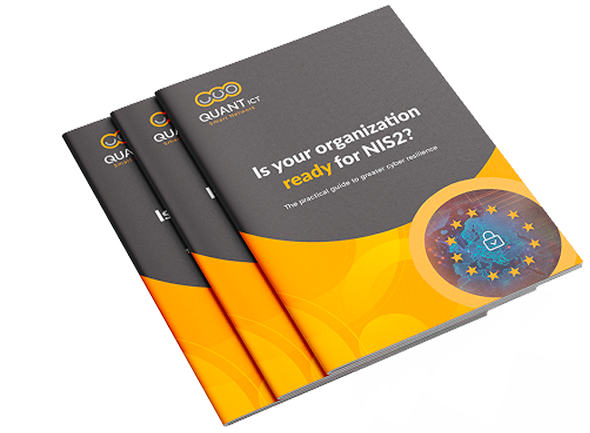
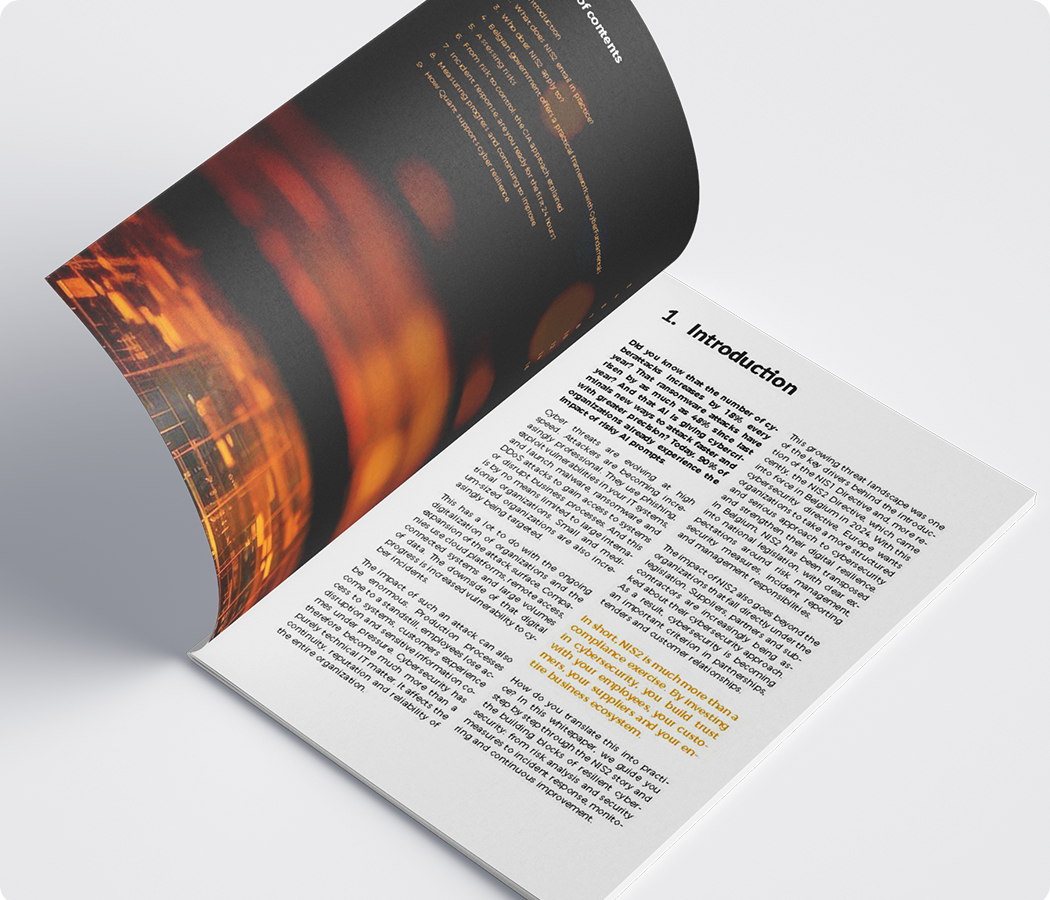
NIS2 is about more than meeting a set of cybersecurity requirements. It asks organisations to take a closer look at their own risks, understand what really matters to their operations and continuously evaluate whether their security measures are still effective.
Every organisation is different. Critical systems, vulnerabilities, access rights and operational dependencies vary by sector, business model and IT environment.
Our whitepaper provides a clear introduction to NIS2 and the principles behind a more proactive, risk-based approach to cybersecurity.
What will you learn in the NIS2 guide?
The whitepaper helps you better understand:
- what NIS2 is and why it matters for organisations and IT teams
- why cybersecurity should start from your organisation’s specific risks and critical assets
- Why existing security measures do not automatically mean that all relevant risks are covered
- How areas such as access management, monitoring, incident response, backup and recovery contribute to cyber resilience
- Why security measures need to work together rather than operate in isolation
- Why cyber resilience requires continuous evaluation and improvement as risks, technologies and business processes change
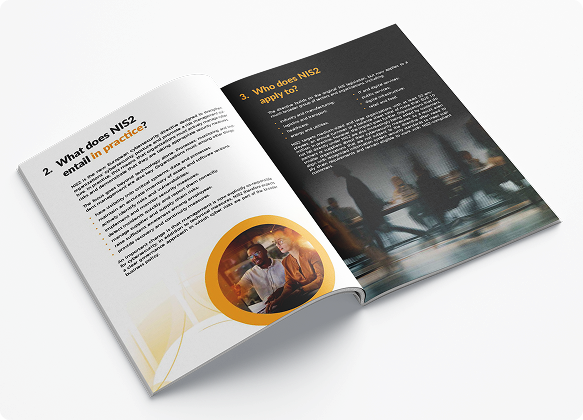
Download our practical NIS2 Guide
Our NIS2 guide gives you a practical starting point to identify where you stand today and which steps deserve priority.
Why choose Quant ICT ?
IT security is never a one-size-fits-all solution. Every business environment is unique, and risk levels vary. At Quant ICT, we develop IT security solutions tailored to your daily operations.
Our experts have years of experience in sectors such as healthcare, education , government , industry , and retail . With this expertise, we assess your environment in depth and implement tailored cyber security solutions that strengthen your productivity, efficiency, and business continuity.
While you focus on your core activities, we take care of:
- 360° IT security: from hardware to cloud
- Zero Trust Security: no access without verification
- Flexible solutions: tailored to your infrastructure
- Fast intervention and monitoring: continuous protection
- Belgian expertise: a local IT partner with over 25 years of experience, delivering efficient, tailored solutions.
Frequently asked questions
IT security covers the protection of your entire IT infrastructure: hardware, software, and networks. Cybersecurity focuses specifically on preventing cyberattacks and data theft.
IT security consists of multiple layers working together to protect your business. Most organizations combine various solutions to protect against internal and external threats. The most common types of IT security include:
- Network security: firewalls, secure web gateways, intrusion detection & prevention (IDS/IPS) systems that monitor and protect your company network.
- Endpoint and server security: antivirus, Endpoint Detection and Response (EDR), and Extended Detection and Response (XDR) solutions that proactively protect devices and servers against malware and ransomware.
- Identity and access management (IAM): multi-factor authentication, single sign-on, and role-based access rights to prevent unauthorized access.
- Email, cloud, and communication security: anti-phishing, spam filters, sandboxing, and additional controls for communication and cloud environments.
- Data and backup security: encryption, secure storage, and offsite backups to protect business data and enable fast recovery after incidents.
- Security monitoring and incident response: 24/7 monitoring (SOC), log analysis, and rapid intervention when suspicious activity is detected.
- Security policy and awareness: training, phishing simulations, and clear security procedures for staff members.
SMEs most often face ransomware, phishing, data breaches, DDoS attacks, and infected devices. Strong cyber protection combines:
- Up-to-date network and endpoint security
- Multi-factor authentication
- Secure backups and encryption of data and communications
- Employee awareness training
- Continuous monitoring
Zero Trust means "never trust, always verify," requiring strict identity authentication for every user and device trying to access resources, regardless of their location. This significantly reduces the risk of both internal and external security breaches. Read more in our Zero Trust whitepaper.
Traditional access, such as VPN, often gives users visibility into large parts of the network.
ZTNA works differently: it grants access only to the specific applications a user needs, requiring constant reverification. This prevents lateral movement, keeps the network invisible, and simplifies compliance with GDPR and NIS2, thanks to detailed logging and control. Read more about ZTNA
Zero Trust strengthens your IT security by eliminating implicit trust across your IT environment. Every user, device, and request is continuously verified based on identity, context, and risk. The key benefits of a Zero Trust approach include:
- Support for modern work environments, enabling secure access for remote, hybrid, and mobile users.
- Improved visibility into network and application traffic, helping you understand who accesses what and when.
- Faster threat detection and response, thanks to continuous verification and monitoring.
These benefits are particularly relevant for network security, where Zero Trust principles ensure that access is always verified and tightly controlled. Zero Trust Network Access (ZTNA) is one way to implement this model, enforcing granular, application-level access instead of broad network access to the entire environment. Read more about the sector-specific benefits of Zero Trust Network Access (ZTNA).
- We start with a security audit of your current IT infrastructure.
- Based on the audit results, we build a security plan aligned with your systems.
- Then implementation follows, in close collaboration with your internal IT team or external partners.
- After go-live, we provide continuous monitoring, maintenance, and updates.
Cyber threats evolve constantly. Continuous monitoring ensures unusual behavior is detected and addressed before damage occurs. With automation and expert oversight, attacks can be detected and neutralized faster.
QUANT ICT provides IT security across various sectors: healthcare, education, government, industry, and retail. With more than 25 years of experience in these sectors, we combine practical insights with advanced, sector-tailored security measures. Read more about our sector-specific IT security solutions.