The Session Border Controller (SBC) Matters
2026
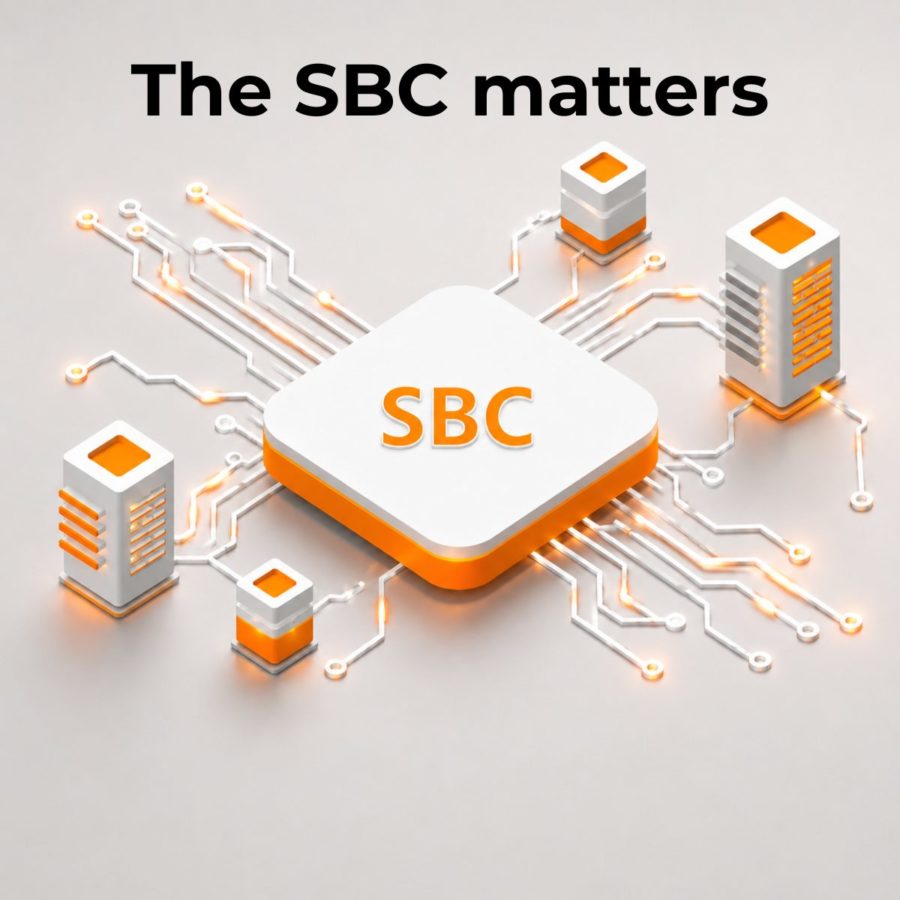
Enterprise voice has changed dramatically. What used to be a mostly internal PBX environment has evolved into a communication landscape connected to SIP providers, cloud platforms, remote users, legacy systems, and hybrid communication services... This creates more flexibility, but also more complexity. A Session Border Controller (SBC) helps organizations keep that complexity under control.
An SBC acts as the trusted control point between internal voice infrastructure and external communication networks. It protects the edge of the voice environment, controls how sessions are routed, normalizes differences between platforms, and provides visibility into what is happening across the communication path.
Before going deeper into security and cloud telephony integration, it is useful to summarize the broader value of an SBC in modern enterprise communication.
-
Flexibility across providers and platforms
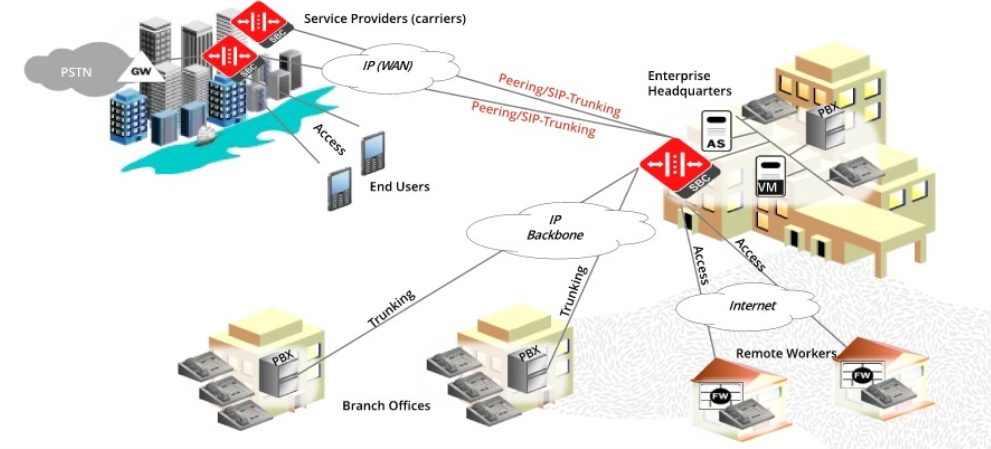
Organizations rarely want to depend on a single telecom provider or one fixed communication platform. An SBC allows multiple SIP providers, cloud voice platforms, and hybrid telephony systems to be connected through one controlled layer. This supports:
- provider redundancy
- geographic flexibility
- cost optimization
- more resilient communication design.
This flexibility is also valuable during migrations. Many organizations still have legacy PBX or PSTN components that cannot be replaced overnight. An SBC helps bridge older systems with modern SIP and cloud environments, allowing businesses to modernize step by step without disrupting daily communication.
-
Call control and intelligent routing
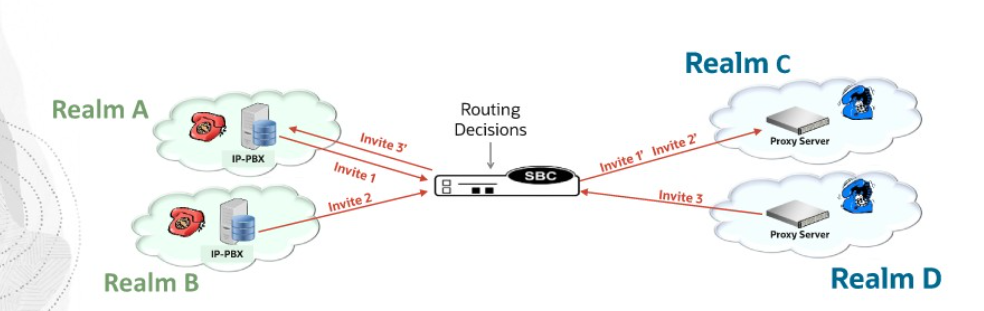
An SBC is more than a connection point. It can act as the decision layer for voice traffic. An SBC supports policy-based call control, allowing organizations to route calls based on provider availability, destination, time-based policies, failover logic, least-cost routing, or business requirements.
This gives IT teams more control over how calls move between SIP providers, cloud platforms, branch offices, datacenters, and legacy systems. With call admission control, an SBC can also help prevent overload by limiting simultaneous sessions and protecting call quality during busy periods.
-
Media handling and voice quality
Reliable voice communication depends on both signaling and media. Even when SIP signaling works, poor media handling can lead to delay, one-way audio, dropped calls, or inconsistent quality. An SBC helps stabilize media paths by anchoring RTP traffic, supporting NAT traversal, and negotiating compatible codecs between different platforms.
In hybrid environments, this is especially important. Different providers and platforms often use different codec preferences, network behavior, or media requirements. An SBC reduces these interoperability issues and helps maintain predictable call performance.
-
Number normalization and SIP interoperability
Voice environments often contain different numbering formats and SIP implementations. One provider may expect E.164 numbers, while another uses local dialing formats, prefixes, or provider-specific requirements. An SBC can translate calling and called numbers before routing, helping organizations maintain a clean and predictable dial plan.
It also acts as a SIP normalization layer. By adapting headers, URI formats, signaling behavior, and platform-specific requirements, an SBC reduces compatibility issues between SIP providers, cloud telephony platforms, and legacy PBX systems.
-
Monitoring and operational visibility
Once voice traffic becomes distributed across providers and cloud platforms, visibility becomes essential. An SBC provides insight into:
- session activity
- call success and failure patterns
- SIP signaling behavior
- media performance
- traffic volumes
- and provider connectivity.
Through capabilities such as SNMP monitoring, syslog integration, email alerting, QoS statistics, Historical Data Records, and Call Detail Records, an SBC helps teams troubleshoot faster and operate more proactively. This makes it easier to detect abnormal behavior, identify recurring issues, plan capacity, and improve service continuity.
-
STAY TUNED
The next two blogposts will focus on:
- Security and SIP protection from an SBC perspective:
- Microsoft Teams Direct Routing as a specific cloud telephony scenario*
*Oracle SBC is especially relevant here because it is certified by Microsoft for Direct Routing and includes configuration options designed specifically for this Microsoft telephony model.
May, 2026
Steven Deferme